A security cabin operating 24 hours a day must provide more than shelter and a clear view of the entrance. For security personnel working long shifts, the cabin becomes a permanent workplace where comfort, visibility, equipment accessibility and reliable building performance are essential.
Across the UK, continuously staffed security points are common at logistics centres, industrial estates, residential developments, construction sites and commercial premises. These locations often require security personnel to monitor vehicle movements, operate access-control systems, respond to incidents and maintain communication with other employees throughout the day and night.
Designing a security cabin for continuous operation requires careful planning. A structure that performs adequately during occasional daytime use may not be suitable for overnight monitoring or extended occupancy during winter.
This guide explores the key design considerations for 24/7 security cabins, including internal layouts, insulation, lighting, ventilation, technology integration and staff welfare.
Understanding the Requirements of a 24-Hour Security Cabin
The first step is to understand how the security post will operate.
A continuously staffed entrance may have very different responsibilities during daytime and overnight shifts.
During working hours, personnel may manage visitors, register deliveries, check identification and control vehicle barriers. Overnight, the focus may shift towards CCTV monitoring, perimeter security and incident reporting.
The cabin must accommodate both sets of responsibilities.
Important questions include how many guards will occupy the structure, which equipment they will use and whether the entrance will experience heavy vehicle traffic.
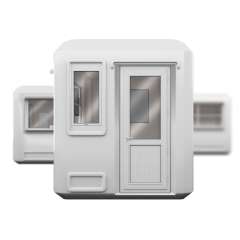
For facilities requiring a dedicated security building, a Security Cabin provides a relevant starting point when planning an entrance-control workspace.
However, the final specification should reflect the site's operating requirements rather than relying solely on standard cabin dimensions.
Choosing the Right Security Cabin Size
Cabin size directly affects working conditions.
A structure that is too small may leave insufficient space for monitoring equipment, seating, storage and safe movement.
Conversely, selecting an unnecessarily large building can increase installation requirements and ongoing heating costs.
Single-Guard Security Cabins
Where one employee operates the security post at a time, a compact cabin may be sufficient.
The layout should accommodate a workstation, chair, communication equipment and essential storage.
The guard should be able to observe the entrance without repeatedly moving away from the desk.
Multi-Guard Security Cabins
Sites requiring two or more guards simultaneously need additional space.
Employees may perform different duties, such as visitor registration and CCTV monitoring.
Separate workstations can help reduce interference between tasks.
The layout should also provide enough circulation space for shift changes and emergency movement.
Planning an Efficient Internal Layout
A practical security cabin layout should support the tasks performed most frequently.
The main workstation is usually positioned close to the windows overlooking the entrance.
However, the precise arrangement depends on the direction of approaching traffic and the location of access-control equipment.
Frequently used controls should remain within comfortable reach.
A typical workstation may include:
- CCTV monitors.
- A computer or visitor registration system.
- Vehicle barrier controls.
- Telephone or radio equipment.
- Incident reporting materials.
- Secure document storage.
Equipment should be positioned to minimise unnecessary movement.
Cable management is equally important. Loose cables can create trip hazards and complicate cleaning or maintenance.
Where multiple screens are installed, monitor arms or appropriate mounting arrangements may help preserve desk space.
Designing Windows for Maximum Visibility
Visibility is one of the most important functions of a security cabin.
Security personnel need to observe approaching vehicles, pedestrian entrances and nearby activity.
Window placement should therefore be determined by the actual site layout.
Daytime Visibility
During daylight, direct sunlight may create glare on computer monitors or make it difficult to observe certain areas.
Window orientation, appropriate shading and screen positioning can help manage these problems.
Night-Time Visibility
After dark, bright internal lighting can produce reflections on glazing.
These reflections may reduce a guard's ability to see outside.
Adjustable task lighting and carefully positioned ceiling lights can help maintain suitable working conditions without unnecessarily affecting external visibility.
External security lighting should also be designed to illuminate important areas without shining directly into the guard's eyes.
Insulation for Year-Round Security Operations
A cabin used continuously must remain comfortable through changing weather conditions.
In the UK, security posts may experience freezing winter mornings, heavy rainfall, strong winds and warmer summer afternoons.
Appropriate insulation helps maintain a more stable internal temperature.
A Sandwich Panel Cabin may be considered where insulated wall and roof construction is an important part of the specification.
The suitability of any structure should be assessed using its actual construction details and thermal performance.
Wall and Roof Insulation
Insulation reduces unwanted heat transfer through the building envelope.
The required specification depends on factors such as local climate, exposure, glazing area and heating arrangements.
Floor Insulation
Floors are sometimes overlooked when planning small security buildings.
However, a poorly insulated floor can contribute to discomfort during cold weather, particularly where personnel remain seated for extended periods.
Doors and Windows
Door seals and glazing performance can have a noticeable impact on heat loss.
Frequently opened entrance doors may also affect the internal temperature.
Suitable specifications can help improve comfort and reduce unnecessary energy consumption.
Heating and Ventilation for 24/7 Use
Heating and ventilation should be considered together.
A well-insulated cabin may retain heat effectively, but it still requires an appropriate supply of fresh air.
Winter Heating
The heating system should be suitable for the cabin's dimensions and operating hours.
Thermostatic controls can help maintain a consistent working temperature.
Portable heating equipment should only be used where it is suitable for the environment and can be operated safely.
Summer Ventilation
Security cabins containing several monitors, computers and communication systems can generate internal heat.
Solar gain through windows may increase temperatures further.
Suitable ventilation, shading or cooling arrangements may therefore be necessary.
Condensation Control
Condensation can become a problem where warm, moist indoor air meets cold surfaces.
Appropriate insulation, ventilation and building maintenance can help reduce this risk.
The objective is to provide comfortable working conditions without compromising air quality.
Choosing Durable Materials for Continuous Operation
A continuously occupied security cabin experiences regular wear.
Doors may be opened frequently, workstations are used across multiple shifts and external surfaces remain exposed to the weather.
Material selection should therefore consider durability and maintenance requirements.
For sites evaluating prefabricated construction options, a Polyester Cabin may be relevant where a compact structure and practical external maintenance are priorities.
The final decision should consider the required insulation, equipment capacity, security specification and intended service life.
External appearance is also important, particularly where the cabin forms part of a commercial or residential entrance.
Integrating CCTV and Access-Control Systems
Modern security cabins often operate as control points for several connected systems.
These may include CCTV cameras, electronic gates, intercoms, alarms and visitor-management software.
The internal design should accommodate this equipment without creating an overcrowded workstation.
CCTV Monitor Positioning
Screens should be arranged according to operational importance.
High-priority camera feeds may need to remain visible continuously, while less frequently used feeds can be accessed when required.
Monitor positioning should also consider glare, viewing distance and the employee's seated posture.
Reliable Connectivity
Network connections are essential where security systems depend on remote servers or central monitoring.
Cable routes and network equipment should be planned before installation.
Where continuous operation is critical, suitable backup connectivity may also be worth considering.
Power Continuity
A power interruption can affect monitoring equipment and access-control systems.
Depending on the site's risk assessment, an uninterruptible power supply or other backup arrangements may be appropriate for essential equipment.
Backup capacity should be selected according to the systems that genuinely need to remain operational.
Lighting for Day and Night Shifts
A 24-hour security cabin needs lighting that supports different activities.
During the day, natural light may provide much of the required illumination.
At night, artificial lighting becomes essential for monitoring equipment, completing reports and moving safely around the workspace.
A combination of general lighting and adjustable task lighting can provide greater flexibility.
The lighting arrangement should avoid strong reflections on CCTV screens and entrance-facing windows.
Emergency lighting may also be necessary depending on the installation and relevant fire safety assessment.
Staff Welfare in a Continuously Occupied Cabin
A security cabin used around the clock should be planned as a workplace.
Employees need appropriate seating, sufficient space, ventilation and access to welfare facilities.
UK Health and Safety Executive guidance identifies requirements relating to workplace temperature, lighting, toilets, washing facilities, drinking water and rest areas.
These facilities do not necessarily all need to be inside the security cabin, but suitable access should be available throughout working hours.
This is particularly important for remote security posts and overnight shifts.
Employers should consider:
- Access to toilets and hand-washing facilities.
- Drinking water.
- Appropriate meal and rest arrangements.
- Storage for personal belongings.
- Comfortable seating.
- Suitable working temperatures.
- Safe access to the cabin during darkness.
Staff welfare arrangements should reflect the number of employees and the conditions at the site.
Security and Physical Protection
The cabin itself may require protective features depending on the location.
For example, a security post at a busy logistics entrance faces different risks from a cabin inside a private residential development.
Potential considerations include secure doors, suitable glazing, external lighting and the position of the building relative to moving vehicles.
Where vehicle impact is a credible risk, protective barriers or other measures may be necessary.
These should be determined through an appropriate site-specific assessment rather than assuming that a standard cabin provides impact protection.
Maintenance Planning for 24-Hour Security Cabins
Continuous operation makes preventative maintenance particularly important.
A fault affecting heating, lighting or access-control equipment may disrupt security operations at any hour.
Regular inspections should cover the building envelope and installed systems.
Doors, locks, seals, roof drainage, ventilation and electrical equipment should be checked according to an appropriate maintenance schedule.
Cleaning arrangements should also account for shift patterns.
Where the cabin cannot be taken out of service, maintenance activities may need to be coordinated with temporary security arrangements.
A Practical 24/7 Security Cabin Design Checklist
Before finalising the specification, site managers should confirm:
- Is the cabin large enough for the expected number of guards?
- Does the workstation support the required monitoring activities?
- Are entrance and pedestrian routes clearly visible?
- Will internal lighting cause reflections at night?
- Is the insulation suitable for year-round occupancy?
- Are heating and ventilation appropriately specified?
- Is there sufficient electrical capacity?
- Are CCTV and access-control systems properly accommodated?
- Is backup power necessary for essential equipment?
- Can staff access suitable welfare facilities during every shift?
- Are the cabin and surrounding traffic routes safe?
- Is there a practical maintenance plan?
Answering these questions early can help avoid operational difficulties after installation.
Designing a Reliable Security Cabin for UK Sites
A successful 24-hour security cabin combines effective observation with a comfortable, practical working environment.
The structure should support security personnel during busy daytime periods and quieter overnight shifts without compromising visibility or access to essential equipment.
For UK sites, insulation, ventilation, weather resistance and reliable building services deserve particular attention.
The most appropriate design will depend on the number of employees, site layout, security systems and operational risks.
By considering these requirements together, facilities managers can create a security cabin that supports continuous monitoring, reduces avoidable disruption and provides a more suitable workplace throughout the year.

 EN
 DE
 ES
 PT
 RU
 AR
 GR
 RO
 KA
 CS


