The Difference Starts With Where Security Happens
In many projects, the security issue is not always about having a separate room. It is about where the guard is positioned during daily operations. Vehicles enter from one side, visitors arrive at a gate, suppliers wait near the loading area and workers move through the site throughout the day. If the security team is too far from this movement, the setup may look complete but may not work well in practice.
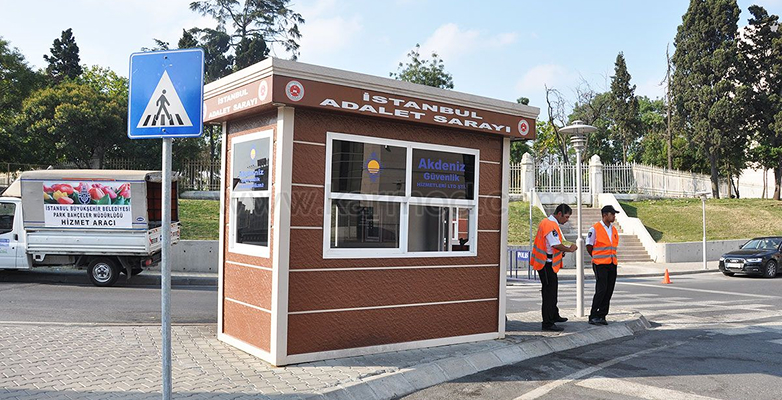
That is where the difference between a security cabin and a security room becomes clear. A security room is usually placed inside a permanent building. A security cabin is positioned closer to the point that needs control, such as a site entrance, parking area, factory gate, construction access road or temporary project zone.
The main difference is simple: a security room supports monitoring from inside a building, while a security cabin supports control directly at the site.
For project owners, this detail matters. Security is not only about assigning staff. It is also about giving that staff the right location, visibility and working conditions.
Security Cabin: A Guard Point Built Around the Site
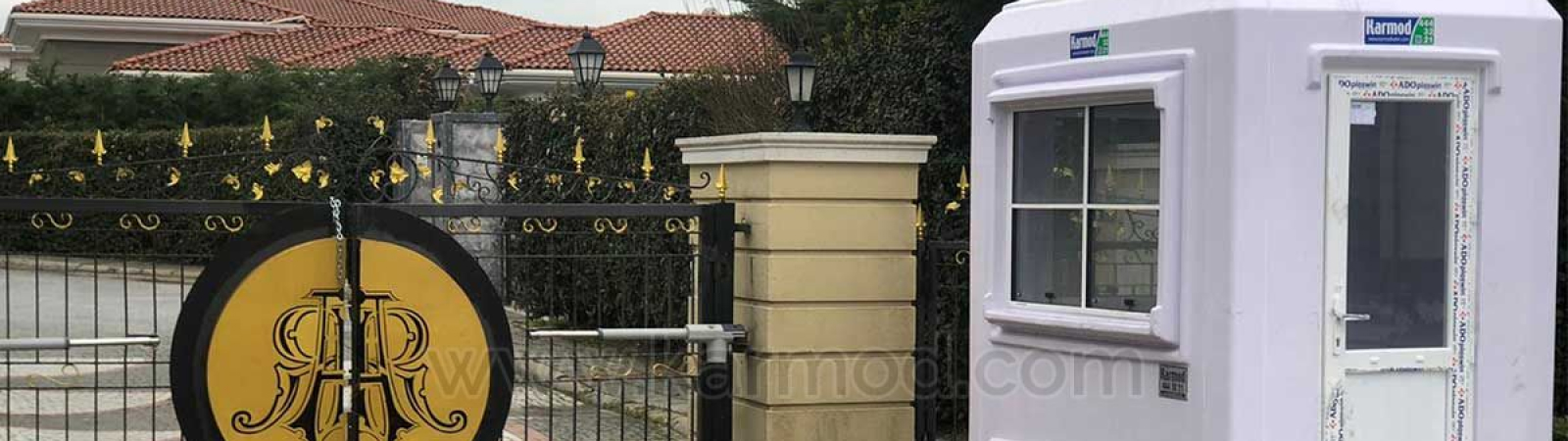
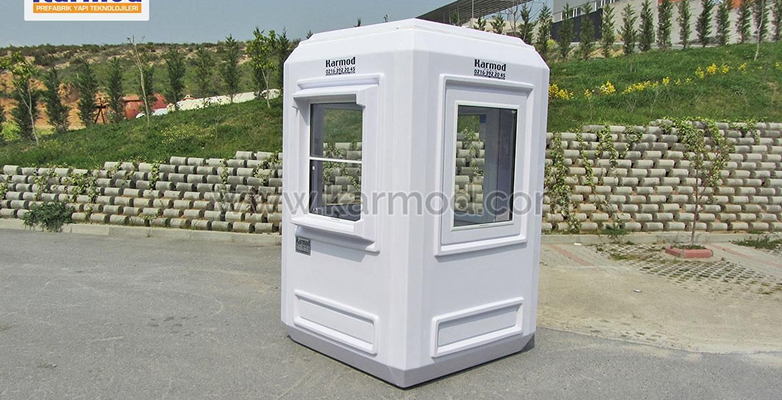
A security cabin is used to create a dedicated guard point where access needs to be managed. It can be placed near an entrance, next to a vehicle route, beside a visitor gate or close to a restricted area. This makes it useful for outdoor locations and project sites where the control point needs to follow the real movement of the site.
A well-positioned security cabin can help guards check visitors, communicate with site teams, monitor incoming vehicles and respond faster to daily situations. It also gives the guard a protected working space instead of leaving them exposed to weather, noise or constant movement.
This type of setup is common in construction sites, industrial facilities, parking areas, warehouses, factories, campuses and temporary work zones. In these environments, the gate or checkpoint is often more important than the main office building. A cabin allows the security team to stay close to that point.
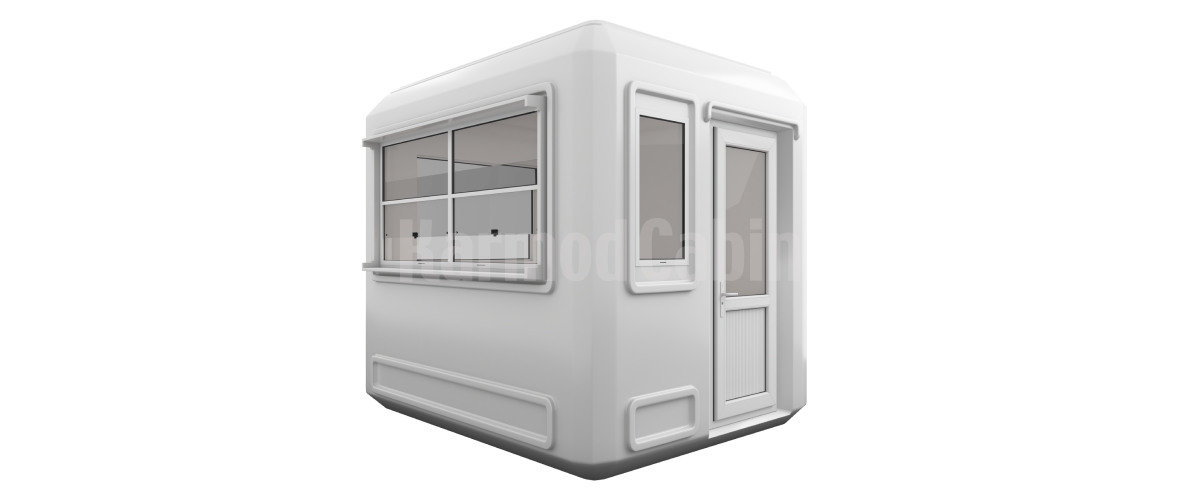
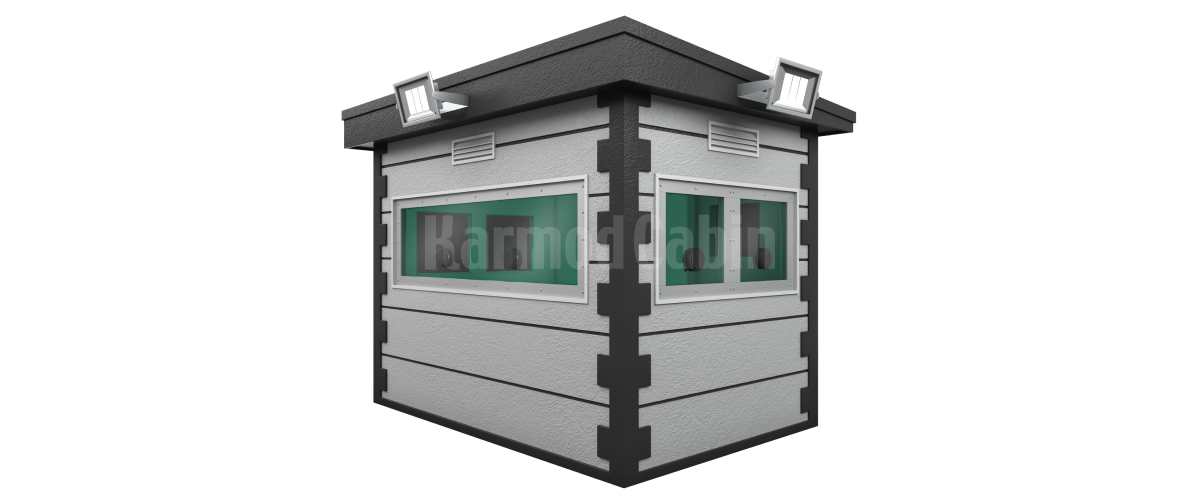
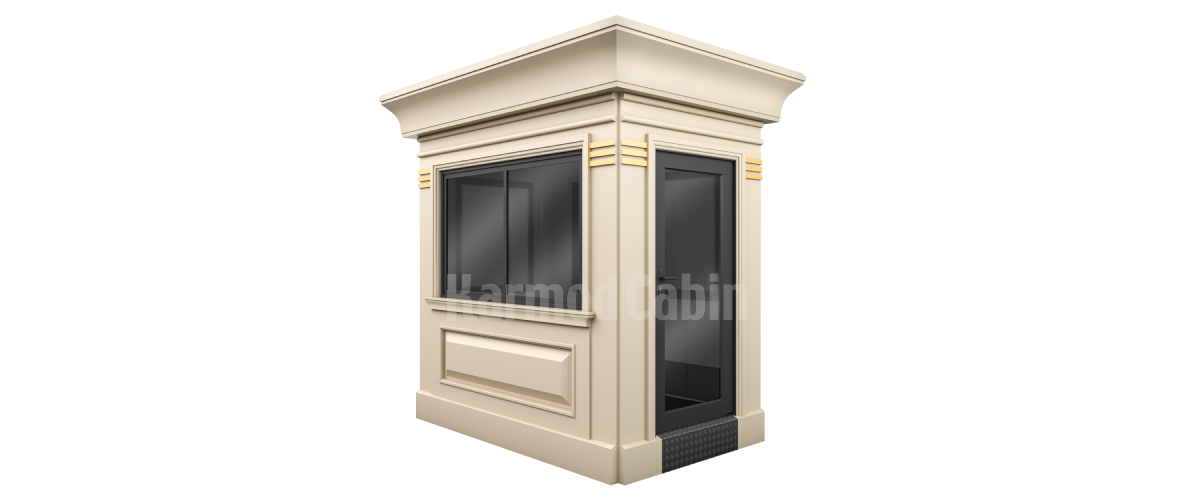
Karmod Cabin supports this type of site-based planning with cabin solutions that can be adapted for guard points, access control, parking areas and project entrances.
Security Room: Useful, But Not Always Close Enough
A security room can be the right choice when the main goal is central monitoring. In large buildings, campuses, hospitals, offices or commercial facilities, a security room may include CCTV screens, access control systems, communication tools and incident records. It gives the team a fixed place to manage information.
That makes sense for many permanent buildings. If the security team needs to watch different camera feeds, coordinate with departments or manage internal access, a room inside the building can work well.
The limitation appears when the actual security activity happens outside. A room inside the building may not give guards direct visibility of the gate, delivery area or parking entrance. Cameras help, but they do not always replace the value of being physically present at the control point.
A security room is not a bad solution. It just serves a different purpose. It is stronger for central control. A cabin is stronger for direct field control.
Visibility, Flexibility and Daily Use
The biggest practical advantage of a security cabin is visibility. A guard near the entrance can see how people and vehicles behave before they enter the site. They can speak to drivers, check documents, guide visitors and notice problems earlier.
Flexibility is another important point. A security room is fixed. Once the building layout is complete, the room stays where it is. But many sites change over time. Construction entrances move. Parking areas expand. Logistics routes shift. Temporary events open and close different access points. In these cases, a cabin-based setup can be easier to plan around the current need.
Daily comfort also matters. A guard point should not be treated like a box with a chair inside. It should have enough space for the person working there, basic equipment, communication tools and a clear view of the area. If the guard needs to manage vehicles, a nearby parking booth may also be a better fit for payment, ticketing or vehicle access control.
A security setup works better when the guard can see the movement, reach the people and stay protected during the shift.
Entrances, Parking Areas and Project Sites
For entrances, parking areas and project sites, a security cabin is usually the more practical option. These are areas where movement is active, visibility matters and the control point needs to be close to users.
On a construction site, workers, suppliers, visitors and trucks may all use the same gate. A security room inside a nearby building may be too far from that flow. A cabin placed near the entrance gives the guard a better position to manage access.
In a parking area, the need may be even more direct. Staff may need to control entry, support drivers, check access, manage payments or guide vehicles. A room inside the building would not offer the same daily control.
Industrial facilities also benefit from cabin-based security points. Factory gates, loading areas, warehouse yards and restricted zones often need a visible guard presence. In these cases, the security point should be placed where the activity happens, not where there happens to be an empty room.
When a Security Room Still Makes Sense
There are still many cases where a security room is the better choice. If a facility needs a permanent monitoring center with multiple screens, records, communication equipment and several staff members, a room can provide more space and infrastructure.
A security room may also be useful when most of the risk is inside the building. For example, a hospital, shopping center, school or office complex may need internal monitoring, alarm response, access control and coordination from a central point.
Some large sites may need both solutions. The security room can manage cameras and internal systems, while the cabin handles the gate, parking area or outdoor checkpoint. This combination can be stronger than trying to force one solution to do every job.
For project sites that also require nearby staff coordination, an office cabin can support administrative work close to the field without mixing it with the guard’s main control function.
Choosing Based on the Way the Site Works
Before choosing between a security cabin and a security room, the most useful question is this: where does the security work actually happen?
If the answer is “at the entrance,” “near the parking area,” “around the site gate” or “beside the vehicle route,” a cabin will usually make more sense. If the answer is “inside the building, through cameras and control systems,” a security room may be the better option.
It also helps to look at the daily routine of the site. Are there many visitors? Do trucks enter and exit often? Does the guard need to speak directly with people? Is the checkpoint temporary or likely to move? Does the guard need protection from weather? These details are more important than choosing based only on the name of the structure.
Karmod Cabin helps project owners create practical cabin-based security points for outdoor, temporary and semi-permanent site needs. The aim is not just to place a unit on the site, but to support the way people, vehicles and staff actually move through it.
The better choice is the one that fits the site’s real routine, not the one that only looks better in a floor plan.
Security cabins and security rooms both have a place in facility planning. A security room is useful for permanent, internal and centralized monitoring. A security cabin is more practical for visible, direct control at entrances, parking areas, construction sites, industrial yards and temporary project locations. The right decision comes from looking at the site as it really works: where people arrive, where vehicles stop, where guards need visibility and how the security routine changes during the day.

 EN
EN
 DE
DE
 ES
ES
 PT
PT
 RU
RU
 AR
AR
 GR
GR
 RO
RO
 KA
KA
 CS
CS