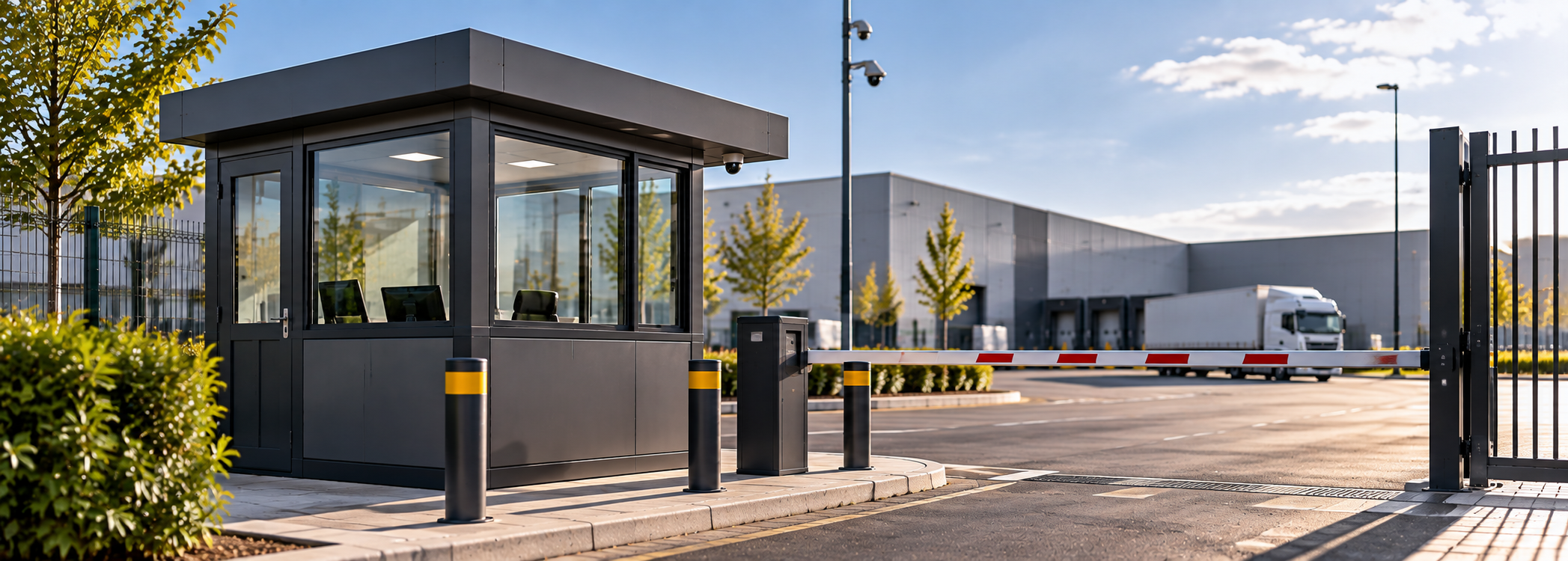
Windows are one of the most important design features of a security cabin. They allow guards to monitor approaching vehicles, observe pedestrian movement and maintain awareness of activity around an entrance. At the same time, glazing forms part of the cabin's external envelope and can influence security, thermal comfort, privacy and the overall working environment.
For UK industrial estates, construction sites, logistics centres, commercial premises and other controlled-access locations, choosing security cabin windows should therefore involve more than deciding how much glass looks appropriate.
The right solution depends on the site's layout, security risk, operating hours, surrounding environment and the responsibilities of the personnel working inside.
This guide explores the main factors UK businesses should consider when specifying glazing for a security cabin.
Why Visibility Matters in a Security Cabin
Security personnel need to understand what is happening around them before making access-control decisions.
Direct visibility can help guards identify approaching vehicles, observe pedestrians, check registrations and recognise potential problems before they reach the entrance.
Although CCTV systems can provide extensive coverage, they should not automatically be treated as a replacement for well-planned sightlines.
A combination of direct observation and camera monitoring can create a more complete picture of the entrance.
For example, a guard may use CCTV to monitor a secondary gate while maintaining direct visual contact with drivers approaching the main barrier.
The position and size of windows therefore need to reflect the actual layout of the site.
Start by Mapping the Required Sightlines
Before deciding where glazing should be installed, identify what security personnel need to see.
Typical observation points may include:
- the main vehicle entrance;
- pedestrian gates;
- visitor parking;
- security barriers;
- delivery lanes;
- loading areas;
- surrounding fencing;
- nearby roads.
Once these areas have been identified, the cabin can be positioned and its glazing arranged accordingly.
A security cabin at the centre of a multi-lane entrance, for instance, may require visibility on several sides. A cabin positioned beside a single access road may need a different configuration.
The aim should be to provide useful sightlines rather than simply maximise the amount of glass.
More Glazing Is Not Always Better
Large windows can create excellent visibility, but excessive glazing may introduce other challenges.
Every glazed section reduces the wall area available for equipment.
- Modern security cabins may need space for:
- CCTV monitors;
- alarm panels;
- communication equipment;
- electrical controls;
- shelves;
- storage;
- access-control systems.
If nearly every wall is glazed, finding practical locations for this equipment can become difficult.
Large windows can also increase solar gain during warmer periods and potentially increase heat loss during colder weather if the glazing specification is unsuitable.
A balanced design usually works best: enough glazing to provide clear observation, with sufficient solid wall area for technology and storage.
Positioning Windows for Vehicle Access Control
Many security cabins are located beside vehicle entrances.
In this situation, the height and position of service windows should allow guards to communicate conveniently with drivers.
The types of vehicles using the site should be considered.
A commercial property mainly used by cars will have different requirements from a distribution centre receiving HGVs throughout the day.
If the window is poorly positioned, drivers may need to leave their vehicles unnecessarily or security personnel may need to stretch to exchange documents.
The relationship between the cabin, road and vehicle lane should therefore be considered as a complete system.
Glare and Reflections Can Affect CCTV Monitoring
One issue that can easily be overlooked during cabin design is screen glare.
Placing CCTV monitors directly opposite large windows may make them difficult to view when sunlight enters the cabin.
Reflections can be particularly disruptive during certain times of day when the sun is low.
The orientation of the building should therefore be considered alongside the internal layout.
- Possible solutions can include:
- repositioning screens;
- adjusting window placement;
- using blinds where appropriate;
- controlling internal lighting;
- considering suitable glazing treatments.
The objective is to maintain exterior visibility without compromising the guard's ability to monitor electronic security systems.
Thermal Performance in the UK Climate
Security cabins are frequently occupied for long periods and may operate 24 hours a day.
In the UK, maintaining a comfortable internal temperature throughout the year requires attention to the performance of the entire building envelope, including windows.
Poorly specified glazing can contribute to heat loss during winter and uncomfortable internal temperatures during warmer periods.
The glazing specification should therefore be considered alongside:
- wall insulation;
- roof insulation;
- door performance;
- heating;
- ventilation;
- cabin orientation.
For security facilities where appearance, comfort and observation are all important, solutions such as the Metro Lux Cabin can provide a useful reference when considering a modern cabin design.
Thermal performance becomes particularly important where guards work extended shifts.
A security cabin is not simply a shelter; it is a workplace.
Weather Exposure and Water Management
Windows on an exposed security cabin need to cope with typical British weather conditions, including wind-driven rain.
Frames, seals and installation details should therefore be selected with long-term weather resistance in mind.
Water should be directed away from openings, and seals should be inspected as part of routine maintenance.
Condensation should also be considered.
A combination of cold exterior temperatures, internal heating and moisture generated by occupants can create condensation on poorly performing surfaces.
Appropriate glazing, insulation and ventilation can help reduce this issue.
When Is Security Glazing Necessary?
Not every security cabin requires specialist protective glazing.
The appropriate specification depends on the risk profile of the site.
A standard guard cabin at a low-risk commercial entrance may have very different requirements from a security post protecting critical infrastructure, sensitive facilities or high-value assets.
Where there is a credible risk of deliberate attack, forced entry or ballistic threats, security glazing may form part of a wider protective specification.
In higher-risk environments, the glazing should not be considered separately from the rest of the structure.
Walls, doors, frames and connection details all contribute to the overall protective performance.
An Armored Cabin may therefore be more appropriate for locations where the risk assessment identifies a need for enhanced physical protection.
The required protection level should be determined according to the specific threat environment rather than selected simply because a stronger specification is available.
Protective Glazing and Clear Visibility
Higher-security glazing still needs to support the primary operational function of the cabin: allowing security personnel to observe their surroundings.
Optical clarity matters.
Distortion, reflections or poorly positioned frames can make observation more difficult, particularly where guards need to identify faces, vehicle details or suspicious behaviour from a distance.
This is why protective performance and operational visibility should be considered together.
A window that offers a high level of physical protection but creates poor sightlines may undermine the effectiveness of the security post.
Privacy May Also Be Important
Visibility does not always need to work equally in both directions.
In some facilities, businesses may want guards to see outside clearly while reducing the ability of visitors to observe CCTV screens, documents or security equipment inside the cabin.
The internal layout can often help achieve this without compromising external visibility.
Screens can be positioned away from visitor-facing windows, while sensitive documentation can be stored in enclosed units.
Blinds or other privacy measures may also be useful in selected areas, provided they do not interfere with critical observation points.
Night-Time Visibility Requires Different Planning
A glazing arrangement that performs well during daylight may behave differently after dark.
Bright internal lighting can create reflections on windows, making it difficult for guards to see outside.
For sites operating overnight, the lighting design should therefore be coordinated with the glazing.
Reducing unnecessary brightness near windows and providing suitable exterior lighting can improve night-time visibility.
External lighting should illuminate key areas such as:
- gates;
- barriers;
- pedestrian routes;
- vehicle inspection points;
- surrounding approach areas.
CCTV performance should also be considered as part of the same lighting strategy.
Window Position and Guard Ergonomics
Guards should not need to repeatedly stand, lean or turn awkwardly to observe important areas.
Window heights and sightlines should correspond with the normal working positions inside the cabin.
If guards spend much of their shift seated at a workstation, they should ideally be able to monitor the primary entrance without constantly leaving their chair.
At the same time, standing observation should remain practical.
This is particularly important for cabins used continuously, where poor ergonomics can become frustrating over long shifts.
Think About Cleaning and Maintenance
Security cabin windows are often positioned close to roads, industrial areas and construction traffic.
Dust, mud, exhaust residue and general dirt can quickly reduce visibility.
Glazing should therefore be accessible for routine cleaning.
Frames, seals and opening mechanisms should also be inspected periodically.
A window that becomes difficult to open or develops damaged seals can affect ventilation, comfort and weather resistance.
Maintenance requirements should be considered when selecting the design rather than after the cabin has been installed.
A Practical Security Cabin Glazing Checklist
Before finalising the window specification, site operators should ask:
What areas must guards be able to observe directly?
Which sides of the cabin require glazing?
What types of vehicles will approach the cabin?
Where will CCTV monitors and other equipment be positioned?
Could sunlight cause glare on security screens?
Will the cabin operate at night?
What level of thermal performance is appropriate?
Is enhanced security glazing required by the site's risk assessment?
Can windows be cleaned and maintained easily?
Could future changes to the entrance affect existing sightlines?
These questions help ensure that glazing is selected according to operational requirements rather than appearance alone.
Choosing the Right Windows for a UK Security Cabin
Effective security cabin glazing should balance visibility, safety, comfort and practical workspace requirements.
For many UK sites, the priority will be creating clear sightlines towards vehicles and pedestrians while maintaining good thermal performance and providing enough solid wall space for security equipment.
Higher-risk facilities may require more specialised solutions, including enhanced glazing and an armoured cabin structure. In those situations, the entire protective system should be considered together rather than treating windows as an isolated component.
Site layout also matters. A security cabin overlooking one vehicle lane requires a different glazing arrangement from a guard post controlling several entrances.
By considering sightlines, vehicle interaction, CCTV positioning, night-time visibility, weather exposure and security risks during the design stage, businesses can create a security cabin that supports guards in their daily work while providing an appropriate level of protection for the site.

 EN
EN
 DE
DE
 ES
ES
 PT
PT
 RU
RU
 AR
AR
 GR
GR
 RO
RO
 KA
KA
 CS
CS