Workforce camps need organized, comfortable and reliable spaces for teams working away from permanent facilities. In construction sites, industrial fields, mining areas, energy projects and remote operation zones, workers need more than a place to stay. They need safe accommodation areas, dining spaces, sanitary units, rest zones, security points and daily service areas that can support life in the field.
A well-planned workforce camp helps teams work more efficiently and live in better conditions during the project period. When accommodation, hygiene, dining and access control are planned together, the camp becomes easier to manage for both employees and site operators. Cabin solutions make it possible to create these areas with practical layouts that can be adapted to the number of workers, project duration and field conditions.
Karmod Cabin offers cabin solutions that can support different parts of a workforce camp, from accommodation support areas to sanitary units and site service points. For general camp planning, ready-to-use cabin systems can be used for offices, staff areas, rest units and operational spaces. A standard Cabin can also serve as a control room, service point, staff room or support unit inside the camp layout.
Why Workforce Camps Need Cabin Solutions?
Workforce camps are usually built in locations where permanent buildings are limited or not available. Project teams may work in remote construction fields, industrial expansion areas, mining zones, infrastructure corridors or temporary project sites. In these places, camp facilities must be planned quickly, but they also need to be practical, safe and suitable for daily use.
Cabin solutions help workforce camps create organized living and service areas that support both worker comfort and operational control. This is important because a camp is not only a temporary shelter area. It is also a working environment where accommodation, hygiene, food service, safety and logistics must function together.
As the number of workers changes, the camp layout may also need to expand or be reorganized. A project may begin with a small crew and later require additional rest areas, sanitary units, dining support spaces or security cabins. With cabin-based planning, these areas can be added according to the needs of the project.
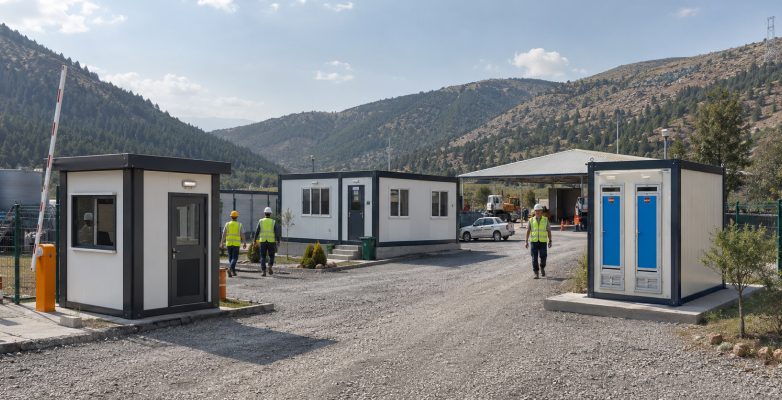
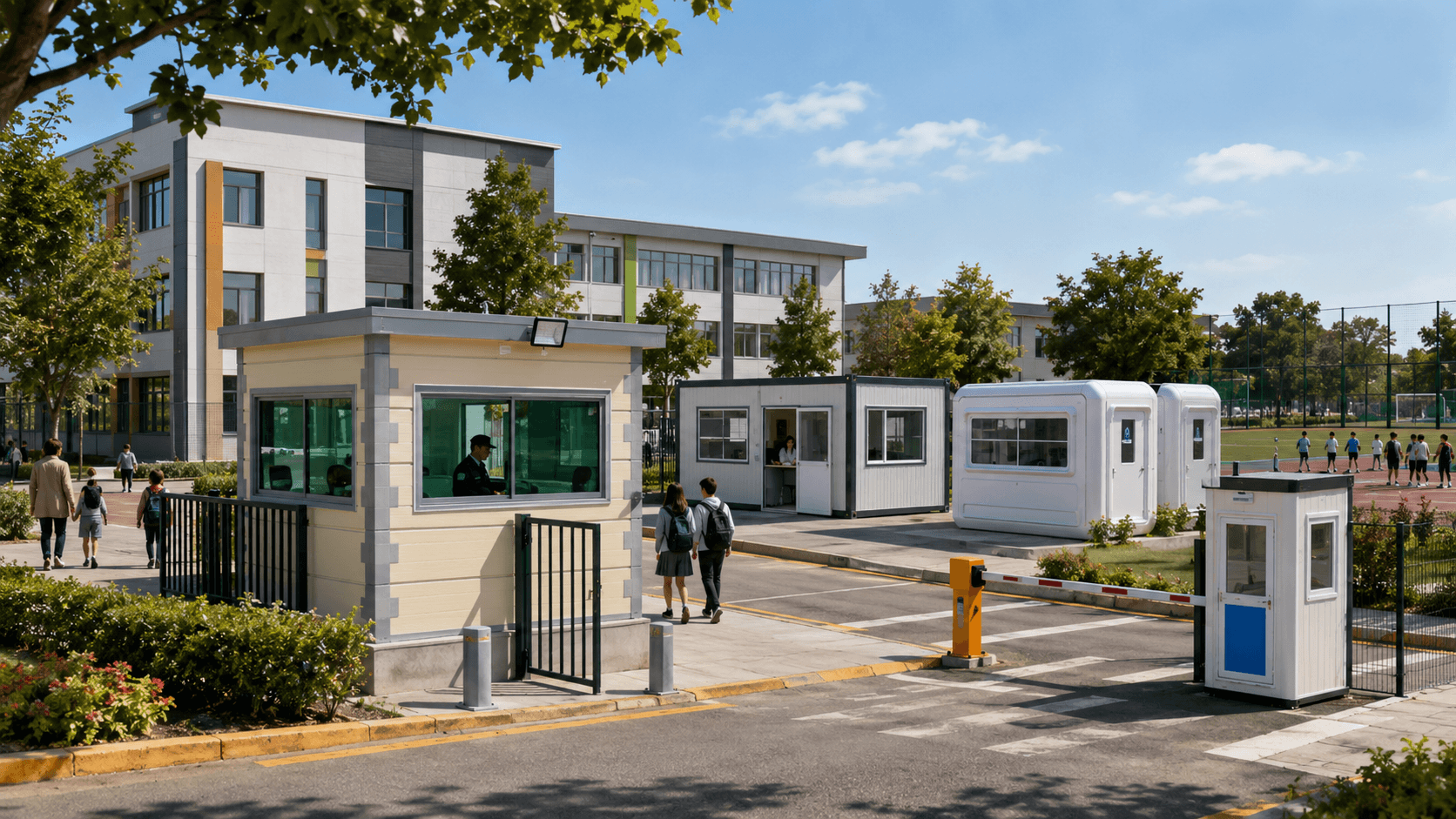
For access and security, a Safety Cabin can be placed at the camp entrance, visitor point or controlled area. If the camp includes vehicle movement, supplier access or staff parking, a Parking Booth can support daily traffic management.
Key Benefits of Cabin Solutions for Workforce Camps
The main benefit of cabin solutions in workforce camps is practical planning. Instead of treating accommodation, hygiene and service areas as separate problems, cabin units allow these needs to be organized as part of one complete camp layout.
Speed is also a major advantage. Workforce camps often need to become functional before the main project reaches full capacity. Cabin systems can help project owners prepare essential areas such as offices, toilets, showers, security points and staff rooms in a shorter period.
Another benefit is adaptability. Camp requirements can change depending on the number of workers, season, project phase or field conditions. Products such as Panel Cabins, Polyester Cabin and Mobo Cabin can be evaluated according to expected use, location and operational needs.
A properly planned workforce camp can improve daily routines, support worker welfare and make field operations easier to manage. When rest areas, sanitary units, dining spaces and control points are positioned correctly, the camp becomes more efficient and more comfortable for long-term use.
Recommended Cabin Types for Workforce Camps
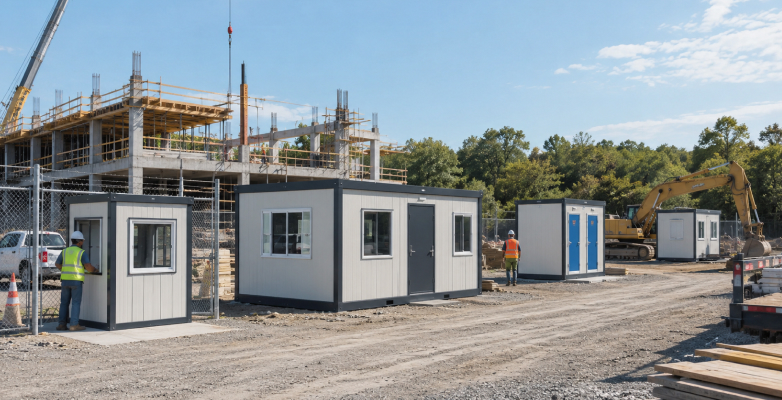
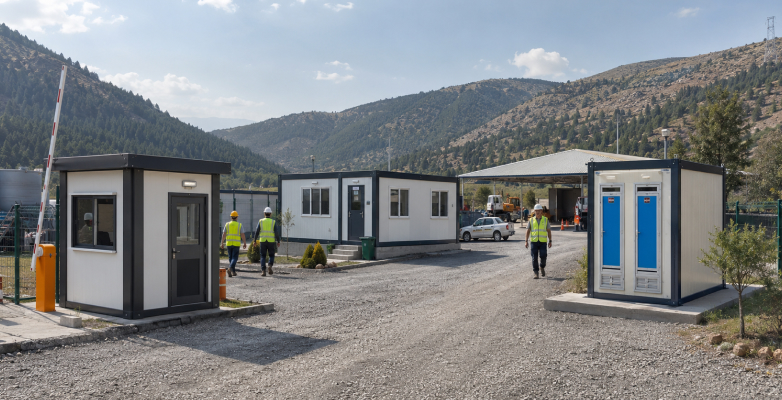
Workforce camps may need several cabin types depending on the size and purpose of the project. Office cabins can be used by camp managers, administrative teams, project supervisors and field coordinators. These spaces support daily planning, documentation, staff coordination and communication with the main operation area.
Hygiene units are one of the most important parts of camp planning. Portable Toilet units can be positioned near accommodation areas, dining zones, work entrances or common-use points. In larger camps, toilet and shower units should be planned according to the number of workers and daily use intensity.
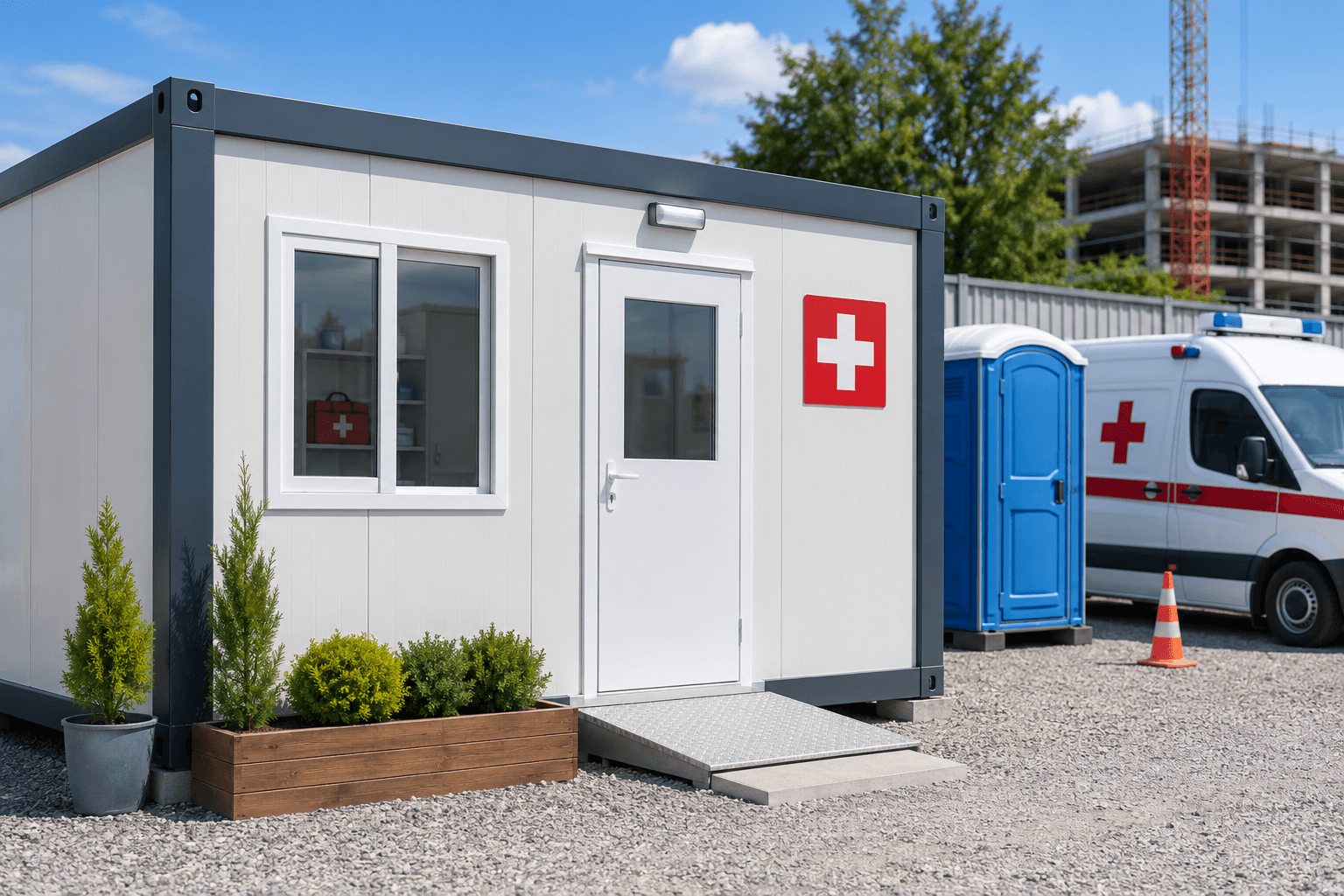
Accessible sanitary solutions may also be needed in long-term camp areas. A Disabled WC Cabin can support more inclusive planning for staff, visitors or administrative areas.
Dining and rest areas are also essential. Camps may need canteen units, kitchen support areas, staff lounges, changing rooms and temporary service points. Security cabins, parking booths and control units can also be used to manage camp entrances, staff movement and supplier access.
Common Use Areas in Workforce Camps
Cabin solutions can be used in many parts of a workforce camp. At the entrance, they can support security checks, visitor registration, staff access and vehicle control. In the administrative zone, cabins can function as offices, meeting rooms, document areas and coordination points.
In living areas, cabins can support rest spaces, sanitary units, changing rooms, dining support and daily service areas. For large camps, additional units can be placed near different zones to reduce unnecessary movement and make daily routines easier for workers.
Workforce camp planning also connects naturally with other sector-specific solutions:
- Cabin Solutions for Construction Sites
- Cabin Solutions for Industrial Facilities
- Cabin Solutions for Transportation and Parking Areas
- Military Cabin Solutions
- Cabin Solutions for Disaster Relief and Emergency Response
- Medical Cabin Solutions
- School Cabin Solutions
- Commercial Cabin Solutions
- Cabin Solutions for Events and Festivals
These related pages help users explore other cabin applications that may share similar needs with workforce camps, such as field operations, emergency accommodation, site offices, controlled access points and temporary service areas.
Customizable Cabin Designs for Workforce Camps
Every workforce camp has different requirements. A mining camp, road project camp, energy field camp and industrial site camp may all need different layouts. For this reason, cabin designs should be planned according to the number of workers, climate, project duration, site access and daily service needs.
Cabins can be customized with different dimensions, interior layouts, doors, windows, insulation, electrical systems, sanitary equipment, ventilation and exterior materials. Office cabins may require work desks and communication infrastructure. Sanitary cabins may need plumbing compatibility and easy-clean surfaces. Service cabins may need counters, storage areas or controlled access points.
Why Choose Karmod Cabin for Workforce Camps?
Workforce camps need cabin solutions that are practical, durable and suitable for daily field use. The right cabin plan can support worker welfare, camp management, hygiene, security and operational continuity.
Karmod Cabin can support workforce camp projects with different cabin alternatives for administration, sanitary use, rest areas, access control and service needs. By combining suitable cabin types, project teams can create a more organized and functional camp environment.
Get a Quote for Workforce Camp Cabin Solutions
If you are planning a workforce camp for a construction, industrial, mining, energy or infrastructure project, cabin selection should begin with the real needs of the site. Workforce size, project duration, hygiene requirements, dining needs, access points and climate conditions should all be considered.
A tailored cabin plan can help your workforce camp become safer, more comfortable and easier to manage. Explore suitable cabin solutions for your project and request a sector-specific proposal based on your field requirements.

 EN
EN
 DE
DE
 ES
ES
 PT
PT
 RU
RU
 AR
AR
 GR
GR
 RO
RO
 KA
KA
 CS
CS