Why Schools Need Flexible Space More Than Ever
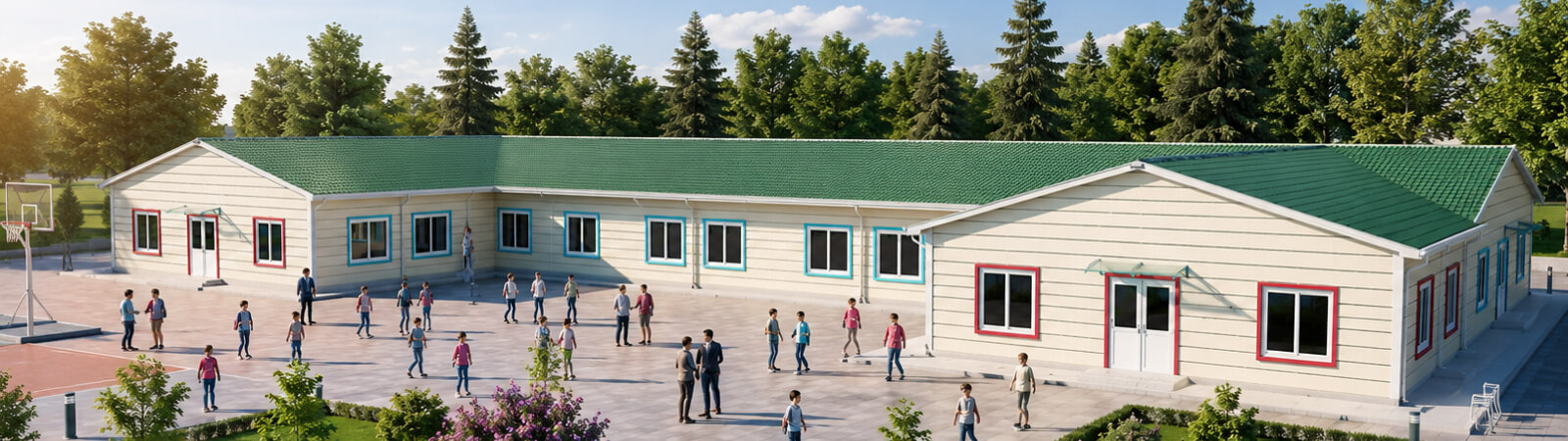
Modular education buildings are used by schools, colleges, universities, and training facilities that need additional space without waiting for a long traditional construction process. They can serve as modular classrooms, temporary school buildings, campus offices, restroom facilities, medical support rooms, storage units, or staff areas during renovation, enrollment growth, seasonal programs, or emergency facility changes. For education leaders in the United States, the main advantage is simple: modular buildings help keep learning, administration, and daily campus operations moving while space problems are being solved.
A school does not always need a completely new building to fix a capacity issue. Sometimes it needs two extra classrooms before the next semester. Sometimes it needs a temporary office while the main building is under renovation. In other cases, a campus needs restrooms, a nurse room, secure storage, or a staff area close to where students, visitors, and employees already move during the day.
This is why modular school buildings have become a practical option for public schools, private schools, colleges, universities, vocational training centers, and other learning environments. They help education teams respond to real facility needs without turning the entire academic year into a construction problem. For many institutions, the issue is not only about adding square footage. It is about protecting class schedules, student safety, staff productivity, and campus flow while the site changes around them.
In the United States, schools often deal with changing enrollment numbers, older buildings, limited budgets, phased construction projects, maintenance issues, and program growth. A modular cabin can be used as a classroom, office, support unit, reception point, storage area, or staff space depending on the layout and site requirements. That flexibility is useful because education facilities rarely have just one space problem at a time.
The best modular education projects start with the daily reality of the campus, not with a generic building layout. Student pathways, bus drop-off areas, staff access, emergency routes, ADA access, utility connections, restroom availability, and supervision points all affect where a modular building should be placed. When these details are considered early, the building feels like a working part of the campus instead of a temporary object placed wherever there was room.
Modular Classrooms That Keep Learning Moving
When a classroom is unavailable, the impact is felt immediately. Teachers may lose their regular teaching environment. Students may be moved into shared rooms, libraries, cafeterias, gyms, or improvised learning spaces. Administrators then have to manage schedule changes, noise issues, room conflicts, and parent concerns. Modular classrooms can help reduce that disruption by giving schools a dedicated learning space while the main facility is expanded, repaired, or reorganized.
A modular classroom should not feel like a downgrade. It needs to support focus, comfort, supervision, and daily movement. Good layout planning makes a major difference. Students should be able to enter and leave safely. Teachers should have enough space for instruction, materials, and classroom management. Lighting, ventilation, heating, cooling, acoustic comfort, and access to nearby restrooms should be considered before the unit is installed.
For elementary schools, modular classroom buildings may need to be placed close to the main building so younger students can move safely between spaces. For middle schools and high schools, they may be used for science support rooms, testing areas, counseling spaces, special programs, or overflow classrooms. For colleges and universities, modular facilities can support admissions, student services, continuing education, career training, language programs, or temporary academic departments.
The biggest advantage is continuity. A school can keep students on site instead of sending them to another location. A college can keep a program active while an older academic building is upgraded. A training facility can launch a new course before a permanent expansion is approved. In each case, modular buildings help decision-makers respond to space demand without allowing construction to take control of the academic calendar.
Karmod Cabin supports this kind of education-focused planning with modular building options that can be adapted for teaching, administration, health support, sanitation, and event-based campus needs.
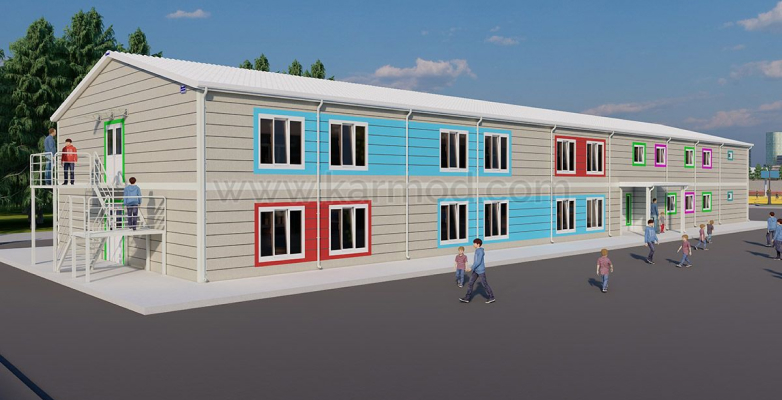
Planning Around Students, Staff and Daily Campus Flow
A modular building only works well if it fits the rhythm of the site. Schools are active environments. Students arrive in groups, parents visit offices, buses and cars move through tight areas, staff need quick access, and maintenance teams need clear service routes. If a modular unit is placed without thinking through this movement, it can create problems even if the building itself is suitable.
For example, a classroom placed too far from the main building may be difficult for younger students during rain, snow, heat, or high-traffic periods. An office unit near a busy entrance may help staff manage visitors more efficiently. A restroom solution near an athletic field may reduce pressure on indoor facilities. A medical support unit near outdoor activity areas may be useful during events, sports days, or temporary campus programs.
Campus planning should reduce friction. Students should not have to cross unsafe traffic areas to reach a temporary classroom. Teachers should not lose time walking between disconnected buildings all day. Visitors should be able to find the right office without moving through student-only areas. Facility teams should be able to connect utilities, manage maintenance, and monitor the structure without interrupting lessons.
Security and visibility also matter. Many schools prefer modular support spaces near entry points because they can help manage access to the campus. A small office unit can function as a check-in point, security booth, administrative office, or construction management space. For larger campuses, modular buildings may also be used near parking lots, athletic fields, dormitories, laboratories, maintenance areas, or phased construction zones.
Planning should include the people who understand the campus from different angles. Facility managers know utilities and access. Teachers understand classroom routines. Administrators understand scheduling pressure. Security teams understand visibility and supervision. Nurses and student support teams understand health and privacy needs. When these views are considered together, the modular setup becomes easier to operate.
Supporting More Than Classrooms: Offices, Restrooms and Health Units
Education sites often need more than classroom space. A school renovation may remove access to administrative offices. A campus event may create heavy restroom demand. A sports program may need temporary changing or sanitation support. A large outdoor activity may require a closer first-aid point. Modular and portable structures can support these needs without forcing the school to depend only on the existing building.
In many education projects, the support spaces are what keep the site functional. A classroom may solve the teaching problem, but the campus may still need restrooms, staff offices, secure entry points, storage areas, and medical support. For this reason, a modular education plan should look at the whole site, not only the room shortage.
Useful support solutions may include:
- Modular classrooms for overflow, renovation phases, program growth, and temporary learning space
- Administrative or faculty offices for staff who need a quiet and defined work area
- Restroom and shower units for events, sports fields, outdoor programs, and temporary campus zones
- Medical support rooms for first aid, nurse use, screening, or student health needs
- Accessible restroom units for students, staff, parents, and visitors with mobility needs
- Storage or staff support units for maintenance, supplies, security, or project coordination
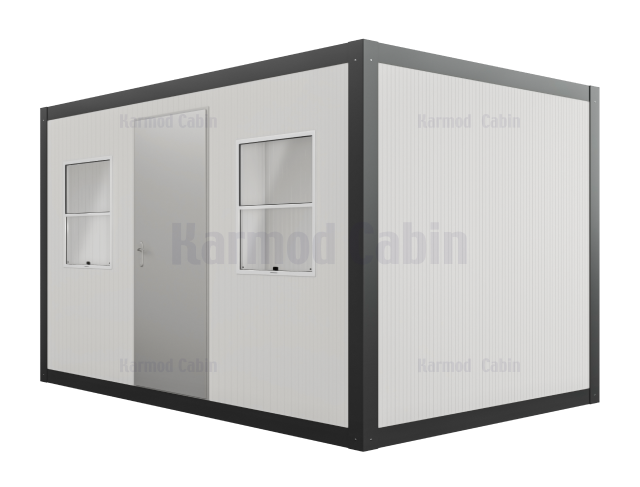
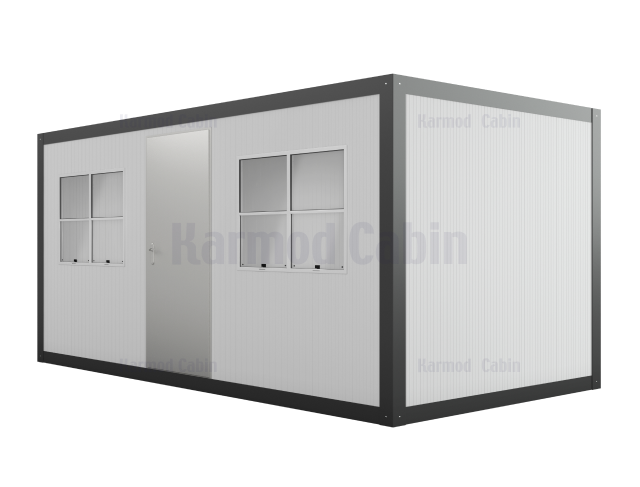
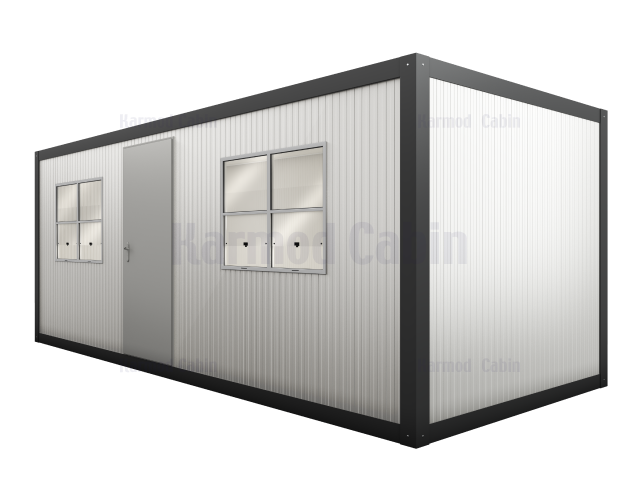
An office cabin can be useful for administrators, admissions staff, faculty teams, security personnel, project managers, or temporary site offices during construction. It gives staff a defined working area instead of pushing them into hallways, storage rooms, or shared classrooms.
Restroom access is another important issue. During field days, campus fairs, graduations, athletic events, outdoor lessons, and community programs, existing restrooms may not be close enough or may not have enough capacity. An event area wc solution can help schools manage higher visitor numbers and reduce crowding inside the main buildings.
Health support is also part of campus planning. A medical cabin can be used as a nurse room, first-aid point, screening area, or temporary health support space. This can be helpful during building repairs, sports activities, summer programs, or large school events where health access needs to be closer to students and visitors.
Accessibility should be planned from the beginning. A portable toilet designed for disabled users can help schools provide better access during outdoor events, construction phases, or temporary campus changes. For students, staff, parents, and visitors, accessible facilities are part of making the site safer, more usable, and more welcoming.
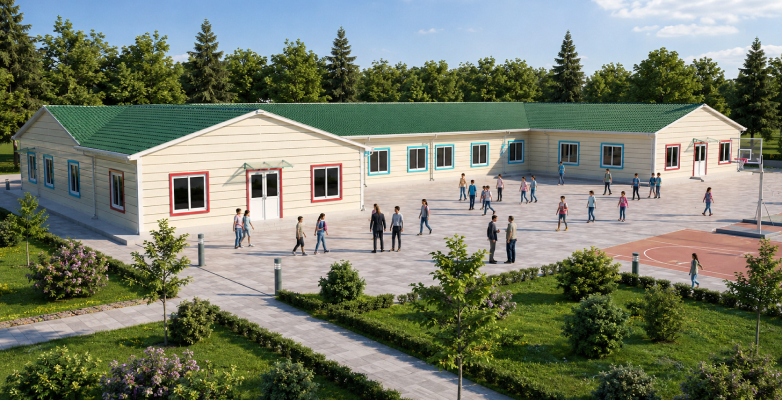
A Practical Option for Renovations, Enrollment Growth and Temporary Disruption
Many education space problems are not permanent at first. A school may need extra classrooms for two years while a new wing is being built. A district may need additional space because enrollment grew faster than expected. A college may need temporary offices while an older facility is upgraded. A training center may need flexible space for a new program before committing to a larger capital project.
In these situations, modular buildings help decision-makers avoid two common problems. The first is doing nothing and forcing people to work in overcrowded spaces. The second is overbuilding too quickly before the long-term need is fully understood. Modular structures create a practical middle path: usable space now, with the ability to adapt later.
This is especially useful in renovation projects. Construction can create noise, dust, blocked access, parking changes, and room closures. If the school has a separate modular unit for classes, staff offices, health support, or storage, the renovation can move forward with less disruption to daily activity. Students continue learning. Staff continue working. Parents see that the school has a clear facility plan instead of temporary confusion.
Enrollment growth is another reason schools look at modular options. Population shifts, new housing developments, district rezoning, or new academic programs can create demand before the next permanent building project is approved. A modular setup can help the school respond to that demand while long-term planning continues.
Temporary disruption can also come from unexpected issues. Storm damage, maintenance problems, utility failures, public health needs, or urgent repairs may remove a room, office, restroom, or clinic area from use. In these moments, modular building options can help schools recover faster and maintain trust with families, staff, and students.
How Modular Buildings Help Control Cost and Project Timelines
Cost matters in every education project. School districts, private schools, charter schools, colleges, and higher education institutions all have to balance facility needs with budget realities. Traditional construction can be the right solution for major long-term projects, but it is not always the fastest or most practical response to an immediate space problem.
Modular buildings can help control costs by reducing the time between planning and use. When a school gets usable space sooner, it may avoid off-site relocation, schedule disruption, inefficient room sharing, or temporary rental arrangements that do not fit the campus well. The direct cost of the unit is only one part of the decision. The bigger question is how much disruption the school avoids by solving the space issue earlier.
For education facilities, the value of modular construction is often measured in time saved, routines protected, and pressure removed from overcrowded buildings. A faster project timeline can be especially important when the school year has already started or when a renovation must be completed in phases.
Modular buildings also make scope easier to manage. Instead of planning a large permanent expansion for every short-term need, a school can choose the specific type of space required. That may be one classroom, several connected units, a staff office, a restroom facility, a health support room, or a combination of these. This helps avoid unnecessary spending while still addressing the real problem.
There is also value in future flexibility. A modular classroom used during renovation may later become a tutoring room, storage area, staff space, testing room, or program office. A temporary office may be moved closer to another project area. Restroom and support units may be reused for events. This adaptability can improve the long-term return on the investment.
Building Safer, More Accessible and More Useful Education Spaces
Safety and accessibility shape how education spaces are used. A modular building should not only create extra room; it should help the campus operate better. That means thinking about entrances, visibility, lighting, walkways, emergency access, restroom availability, inclusive access, and how students move between the modular unit and the main facility.
For schools with younger students, distance from the main building matters. For high schools and colleges, traffic flow between buildings may be more important. For event-heavy campuses, restroom placement and visitor access may be the biggest concern. For construction projects, separating students from work zones is essential. Each site has its own risk points, and modular planning should respond to those conditions.
A useful education space also supports staff. Teachers need rooms that are ready for instruction. Administrators need offices where conversations can happen privately. Nurses and support staff need areas where students can be helped without unnecessary exposure. Maintenance teams need structures they can access and service efficiently.
Accessibility should not be treated as a secondary detail. Walkway connections, restroom access, door placement, ramp planning, and site grading can affect how easily students, staff, and visitors use the building. During events, accessible portable restroom options can make a major difference for families and community members attending the site.
A modular education building should make the campus easier to use, not simply add another structure to manage. When safety, access, and daily routines are considered together, the result is a space that feels more natural for the people who rely on it.
Choosing the Right Modular Setup for Your Education Site
The right modular setup depends on the actual problem the school is trying to solve. If the issue is overcrowding, the priority may be classroom space. If the issue is renovation, the school may need offices, storage, and temporary teaching rooms. If the issue is events, restrooms and support units may matter more. If the site is expanding programs, flexible rooms may be more valuable than a single fixed layout.
Before selecting a building, education teams should define how long the space will be used, who will use it, where it should be placed, what utilities are available, and whether the structure may need to change later. These questions help prevent mistakes. A unit that works well for a short-term office may not be the right choice for daily classroom use. A restroom solution for an event field may not solve a long-term campus accessibility need. A health support unit should be placed where it can actually serve students quickly.
It also helps to think beyond the first use. A modular building that starts as a temporary classroom may later support tutoring, administration, admissions, staff needs, storage, or student services. A support cabin used during construction may later serve athletics, security, or maintenance. This kind of flexibility is valuable for education facilities because campus needs rarely stay the same for long.
Karmod Cabin provides modular and portable building solutions that can support schools, campuses, training centers, and education-related facilities with practical structures for learning, administration, sanitation, medical support, and field use. For decision-makers, the key is not simply choosing a building. It is choosing a setup that fits the campus, protects daily routines, and gives the institution room to adapt when needs change.


 EN
EN
 DE
DE
 ES
ES
 PT
PT
 RU
RU
 AR
AR
 GR
GR
 RO
RO
 KA
KA
 CS
CS